The FDA
Watches labels and product claims. A supplement that names a disease it treats can draw a warning letter, because it is being sold as an unapproved drug.
Three short lines on the front of the bottle carry more legal weight than any paragraph on a sales page. Here is what each is allowed to say, who decides, and what a reader can take from the word supports.
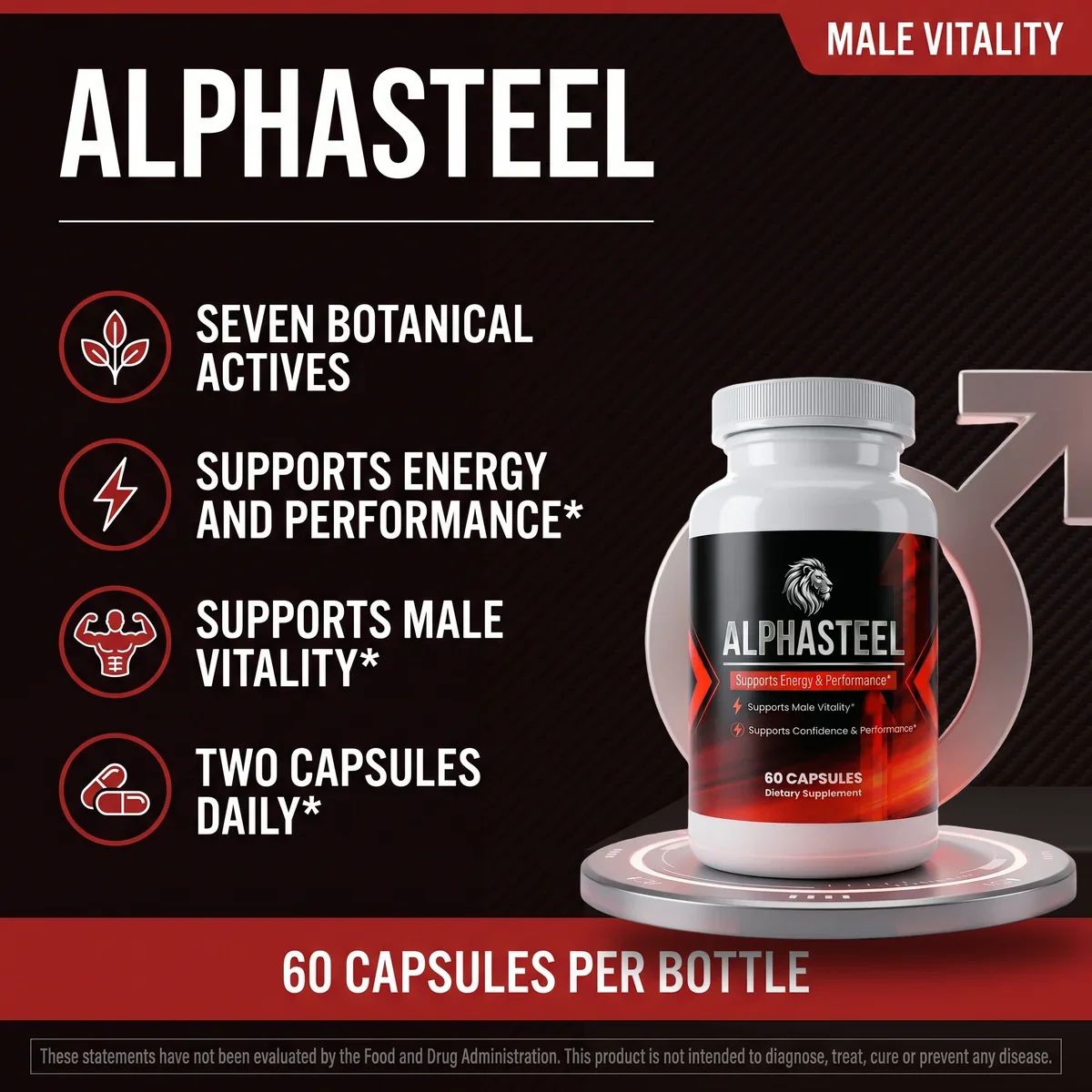
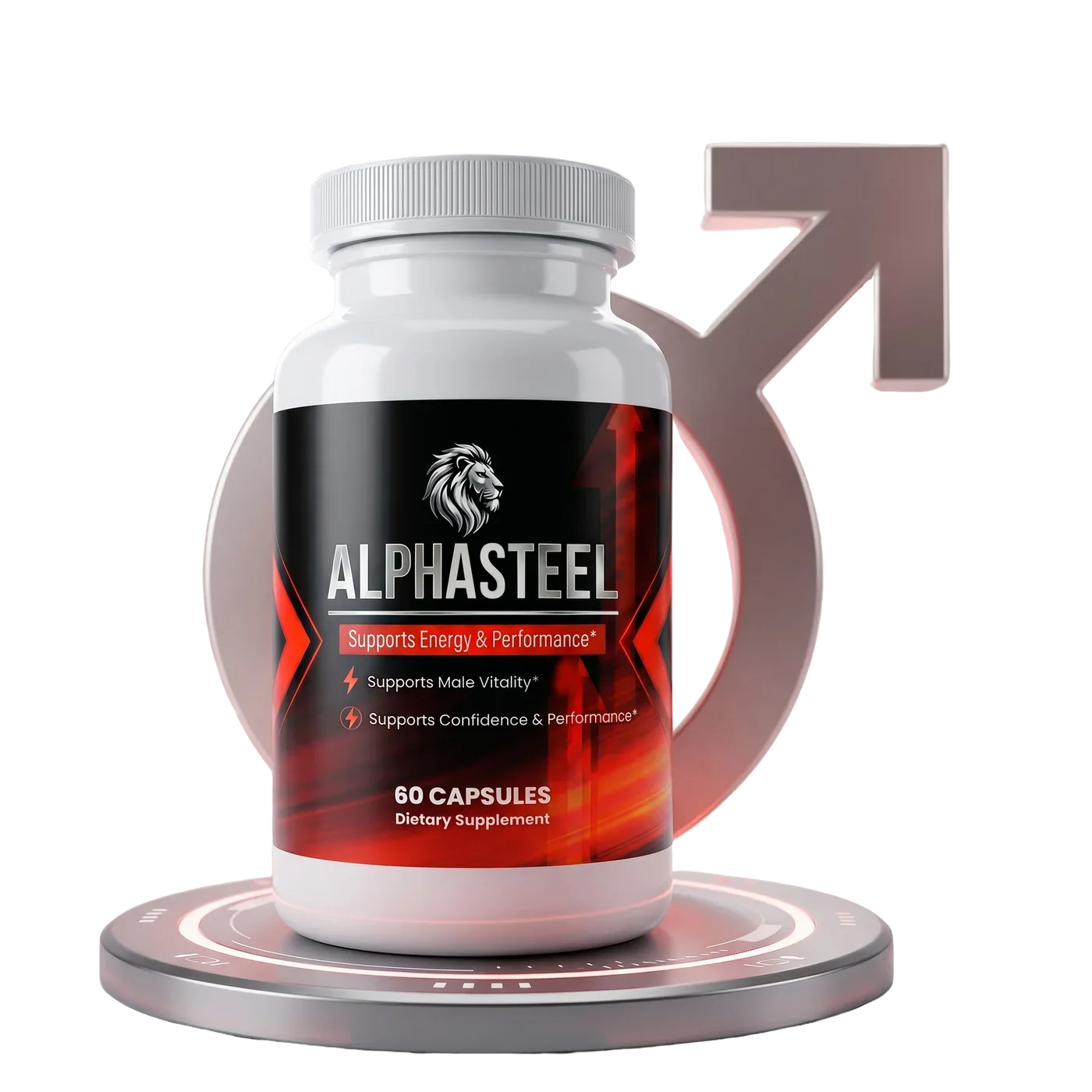
The front of an AlphaSteel bottle carries six lines: the name, three support lines, the count of 60 capsules and the words Dietary Supplement. The three support lines are the product’s whole claim: supports energy and performance, supports male vitality, supports confidence and performance.
Everything else on the bottle, from the panel to the suggested use and the caution, is information. Those three lines are the claim, and the rest of this article is about what they are permitted to mean.
A structure/function statement describes the role an ingredient plays in the normal structure or function of the body, or how it helps maintain that function, without mentioning a disease. A familiar example is ‘calcium builds strong bones’. The FDA’s page on structure/function claims sets out the category and the disclaimer it must carry.
The word supports is the most common verb in the category because it sits squarely inside that definition. It describes a function the body already has, and it offers help rather than a result.
A supplement can make such a statement without the FDA reviewing it first. The FDA does not approve dietary supplements before they are sold, which is the key difference from a drug, and why the statement comes with conditions attached.
The structure/function framework dates from the Dietary Supplement Health and Education Act of 1994. Before it, the line between a supplement’s labelling and a drug claim was fought case by case. The Act gave supplements a defined space: they could describe how an ingredient affects the body’s normal structure or function, provided they stayed away from disease and carried a disclaimer saying the FDA had not evaluated the statement.
The trade-off is the one every reader of a supplement label lives with today. Products reach the shelf without pre-market review, and in return their claims are limited to a vocabulary of support and maintenance. The verb on the AlphaSteel bottle is that trade-off in a single word.
The federal rule is 21 CFR 101.93. Read plainly, it sets three conditions on a structure/function statement made for a dietary supplement.
What the rule leaves out matters as much. It sets no pre-market review, no minimum amount of any ingredient and no standard of effect. A statement can meet all three conditions on a product with modest amounts of each ingredient, which is why the front label alone cannot tell you what to expect.
These statements have not been evaluated by the Food and Drug Administration. This product is not intended to diagnose, treat, cure, or prevent any disease.
The AlphaSteel label
Those two sentences appear on the AlphaSteel bottle and at the foot of every page on this website. They are there because the three support lines are structure/function statements. On the bottle the disclaimer belongs with the claims; on a web page it sits in the footer, below whatever claim the page repeats.
The second sentence is the useful one for a buyer. ‘Not intended to diagnose, treat, cure, or prevent any disease’ is the boundary every claim on the bottle has to stay inside, and it is printed so that a reader can hold the front label to it.
The FDA governs the label. Advertising, including websites and sales pages, is also watched by the Federal Trade Commission. Its Health Products Compliance Guidance holds health-related claims to competent and reliable scientific evidence, judged by what experts in the field would accept.
This is the rule that catches most bad advertising in the category. A label can stay neatly inside ‘supports’ while an advert for the same product promises a result, and the FTC standard applies to the advert. It is also why this website does not describe what AlphaSteel will do for you: the evidence cited here is for single ingredients, not for the finished capsule.
Watches labels and product claims. A supplement that names a disease it treats can draw a warning letter, because it is being sold as an unapproved drug.
Watches advertising. A health claim in an advert, on a website or a sales page, needs competent and reliable scientific evidence behind it.
Checks the verb, looks for a named disease and finds the disclaimer. It takes a minute, and it catches most of what the other two would.
Vitality is not a medical term. It has no diagnostic definition and no laboratory test, which is partly why it works as a structure/function word: it names a general sense of energy and wellbeing rather than any condition.
Read strictly, ‘supports male vitality’ says the formula is intended to support the normal functions that make a man feel energetic and well. It does not say which functions, by how much or how fast. The other two lines narrow it only slightly, energy and performance, confidence and performance, and they are just as general by design.
That generality is not a trick; it is the legal space a supplement is given. But it means the front label cannot tell you what to expect. For that you need the back label: the panel, the amounts and the research on each ingredient.
Names a feeling most adults would like more of and a word, performance, that the label leaves undefined. It sets no amount and no timescale.
The headline claim, and the most general. Vitality has no clinical definition, which is what keeps it inside the rules.
Pairs performance with confidence, a state of mind rather than a body function, and still names no condition.
Read together, the three lines describe a hoped-for state rather than a measurable outcome. That is exactly what the rule permits. It is also why buyers on this desk most often describe a wait of 4 to 8 weeks before forming a view: the claim gives no date, so each buyer sets his own.
Each of those omissions is deliberate and legal. A product that went further would be making a drug claim, or an advertising claim needing evidence of a different order.
| Wording | Kind of statement | On a supplement? |
|---|---|---|
| Supports male vitality | Structure/function | Yes, with substantiation, notification and the disclaimer |
| Supports energy and performance | Structure/function | Yes, on the same terms |
| Treats fatigue caused by an illness | Disease claim | No: that is a drug claim |
| Reduces the risk of heart disease | Health claim | Only with FDA authorisation |
| Guaranteed to work within days | Advertising promise | Only with competent and reliable evidence, and never about disease |
Run any product in the category through three questions. What is the verb? Is a disease named? Where is the disclaimer? A label that passes all three is at least playing by the rules. Whether the product suits you is a separate question, answered by the panel and the research, and the choosing guide sets out the rest of the checks.
The FDA’s list of tainted sexual-enhancement products shows the far end of the scale: products that promised drug-like effects and were found to contain drugs. A careful label is the first sign a product is not one of them, though never proof on its own.
AlphaSteel is a dietary supplement, not a treatment for any condition, and its label claims support for energy and performance, male vitality, and confidence and performance, nothing more. This article explains labelling rules; it is not legal or medical advice. If a health concern is behind your interest in the category, a clinician is the right first stop.