Tongkat Ali Trials: What Was Measured, And In Whom
Tongkat ali is one of the most studied botanicals on the men’s shelf, and one of the most misquoted. The quickest way to read its research honestly is to ask one question of every study: who was in it?
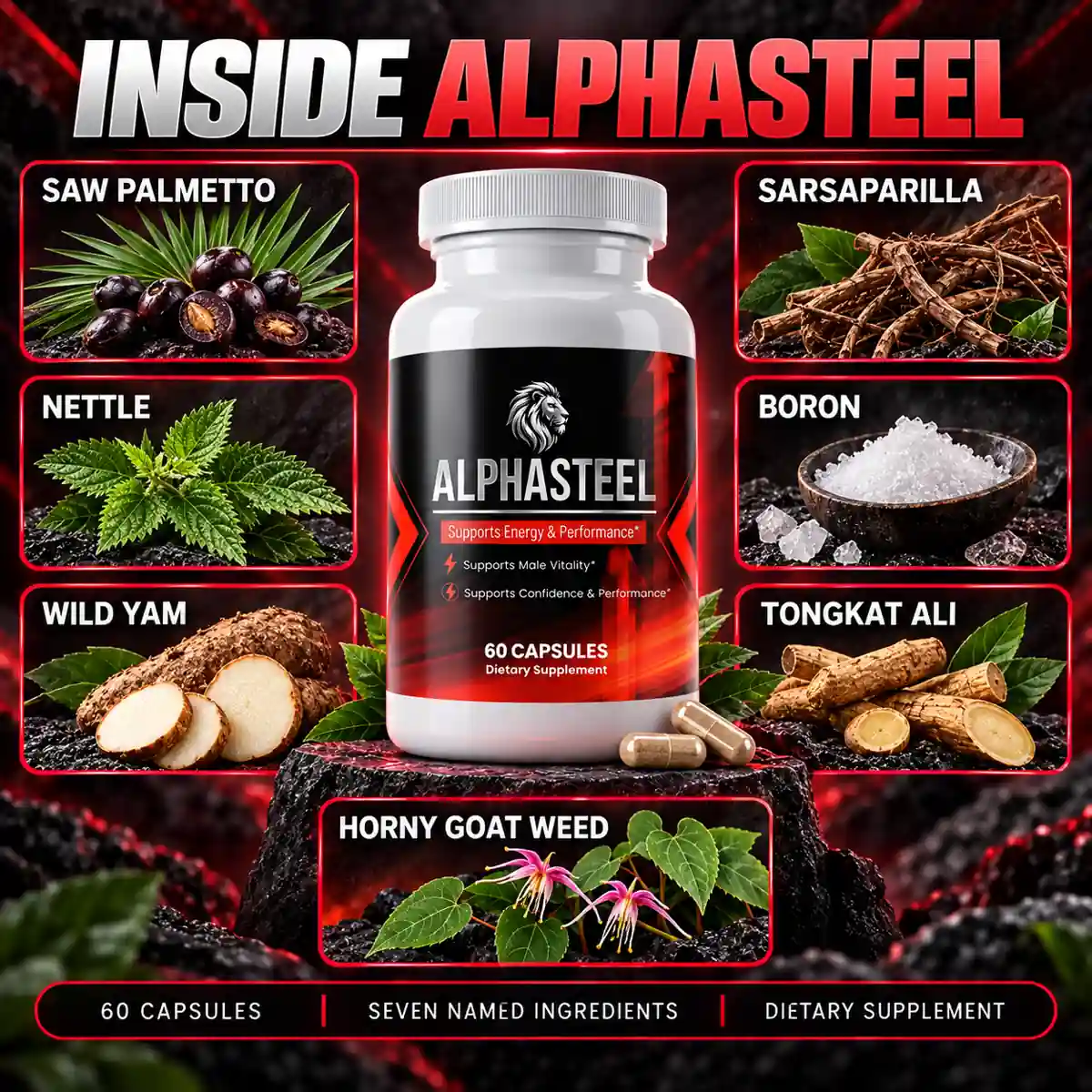
- On the label: 10 mg of a 100:1 extract per serving, labelled as equal to about 1,000 mg of dry tongkat ali powder.
- In the trials: Men with age-related androgen deficiency, moderately stressed adults of both sexes, and pooled healthy and hypogonadal men.
- The lesson: A result belongs to the people it was measured in. It does not travel on its own to a healthy reader, or to a capsule.
- Quality: A survey of 100 tongkat ali products found 36% over the Malaysian mercury limit.
The row on the AlphaSteel panel
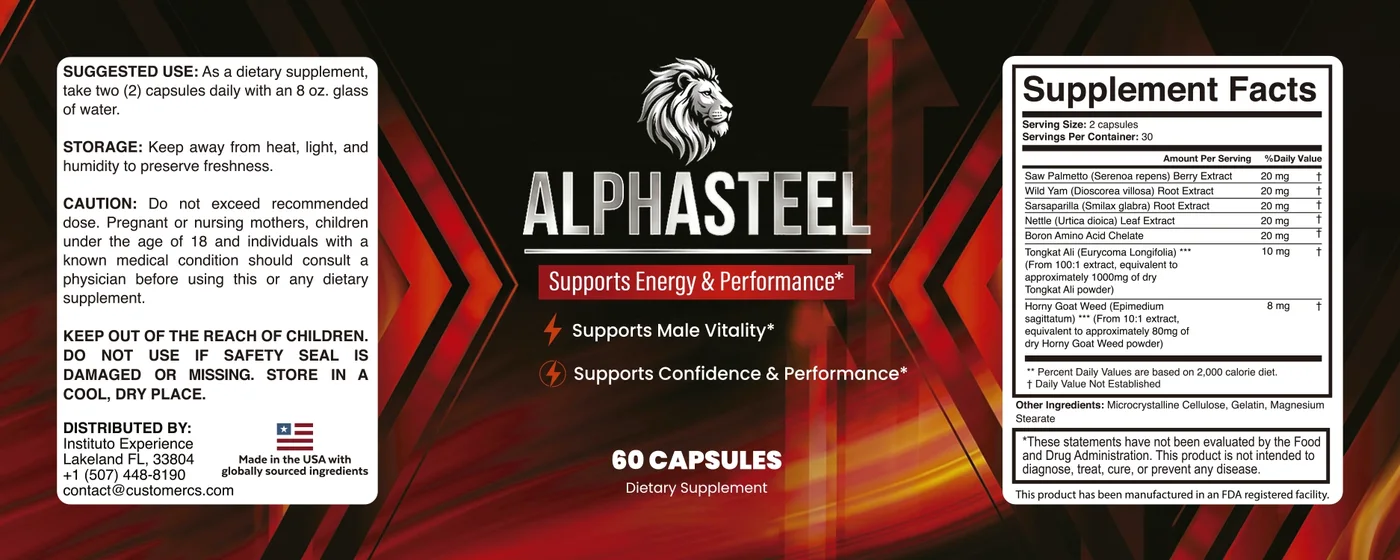
Tongkat ali, Eurycoma longifolia, is a shrub native to Southeast Asia with a long history of traditional use there. On the AlphaSteel panel it is row six: 10 mg, “from 100:1 extract, equivalent to approximately 1000 mg of dry Tongkat Ali powder”.
Two numbers, then. The weight in the two-capsule serving is 10 mg of extract. The dry-powder equivalent, about 1,000 mg, describes how much raw plant that extract was concentrated from. They answer different questions: the first is what you swallow, the second is how concentrated it is.
In the formula as a whole, tongkat ali is row six of seven and 10 of the 118 mg in a serving, a little under a tenth by weight. It is one ingredient among seven, which matters when a single trial of that ingredient is quoted as if it described the product.
Why the population is part of the result
A clinical result is a finding about a group of people, measured in a particular way over a particular time. Change the people and the result may not hold. Something that helps men with a hormone deficiency may do nothing measurable in men without one, and a finding in stressed adults over four weeks says little about anyone else over six months.
That is not a technicality. It is the most common way supplement research gets misquoted: a result in one group is repeated as if it were a property of the ingredient in everyone, then as if it were a property of every product that contains it. Reading tongkat ali’s trials by population is the simplest defence against both mistakes.
Men with age-related androgen deficiency
The six-month trial by Leitão and colleagues, published in Maturitas in 2021, enrolled 45 men aged about 47 on average who had androgen deficiency of aging males. They took a daily Eurycoma longifolia extract, with or without concurrent training, against placebo, and the trial measured erectile function and testosterone levels.
The largest change came in the group that combined the extract with training. Two things about that sentence matter. The men had a diagnosis, so the result describes them, not healthy men. And training was part of the best-performing arm, so the extract was not working alone.
Moderately stressed adults
Talbott and colleagues studied a different population entirely: 63 moderately stressed adults, 32 men and 31 women, given a standardised hot-water root extract or placebo for four weeks. The measures were psychological mood-state scores and salivary cortisol.
The extract group reported lower tension, anger and confusion scores, and salivary cortisol exposure fell by 16%. The abstract gives no daily amount, so this study offers a population and a duration, but no figure to compare with a label.
Pooled healthy and hypogonadal men
A 2022 meta-analysis by Leisegang and colleagues reviewed nine studies and pooled five randomised trials, in healthy men and in men with hypogonadism. It reported a rise in total testosterone across the pooled trials.
Pooling makes a result look larger and more general than any single trial, and that is exactly when the population question matters most. The pooled groups mixed men with a diagnosis and men without one, so the headline figure blends two different starting points. The abstract lists no doses, which leaves the amount question open as well.
The wider review of proposed boosters
The 2024 systematic review by Morgado and colleagues stepped back further, assessing 27 ingredients sold to raise testosterone across 52 studies. Most failed to raise total testosterone. Eurycoma longifolia was among the few rated possibly effective, for healthy men and for men with late-onset hypogonadism.
‘Possibly effective’ is a careful phrase, and it is worth keeping careful. It describes the ingredient, in the amounts and forms those studies used, in the men they enrolled. It is not a rating of any product, and AlphaSteel’s label makes no hormone claim: its three lines say supports energy and performance, male vitality, and confidence and performance.
Four sources side by side
| Source | Who | How long | Amount in the abstract | What was measured |
|---|---|---|---|---|
| Leitão 2021 | 45 men, about 47, with androgen deficiency of aging | 6 months | Stated; see the table below | Erectile function and hormone levels, with and without training |
| Talbott 2013 | 63 moderately stressed adults, 32 men and 31 women | 4 weeks | No figure | Mood-state scores, salivary cortisol |
| Leisegang 2022 | Healthy and hypogonadal men, five pooled trials | Varied | No figure | Total testosterone |
| Morgado 2024 | 52 studies of 27 proposed ingredients | Varied | Varied | Total testosterone |
For scale, and stated once, here is the one source with a daily amount, set beside the tongkat ali row on the AlphaSteel panel.
| Ingredient, as the label prints it | What the cited research used | Per AlphaSteel serving |
|---|---|---|
| Tongkat ali (Eurycoma longifolia), 100:1 extract | 200 mg of extract a day for 6 months, with training, in men with age-related androgen deficiency (Leitão 2021). | 10 mg of a 100:1 extract, labelled as equal to about 1,000 mg of dry tongkat ali powder |
The research column is what a published study gave; the label column is what one two-capsule serving carries. They are different kinds of fact, and the trial’s extract form is not the label’s, so even this comparison is approximate.
Why extract forms make comparisons hard
Even where a trial states an amount, matching it to a label is harder than it looks, because tongkat ali is sold in several forms. The Talbott study used a standardised hot-water root extract. Other products use plain powdered root, or concentrates described only by a ratio, like the 100:1 on the AlphaSteel panel.
A ratio describes how much raw plant went into the extract. It does not say what the extract was standardised to, or how it compares with the extract a trial used. The NIH background on botanical supplements explains why two products with the same plant on the label can differ widely in what they contain.
So the honest comparison is a loose one. A trial’s amount of one extract and a label’s amount of another cannot be ranked precisely without knowing both preparations, and the label and the trial each give only half of that.
Four questions for any tongkat ali claim
- Who was studied? Men with a diagnosis, stressed adults, athletes or healthy volunteers.
- How much, of which extract? A stated daily amount and a named preparation, or neither.
- For how long? Four weeks and six months are different questions.
- What was measured? A mood score, a blood level or a symptom, and whether that is what the claim is about.
A claim that survives all four is describing research honestly. A claim that skips the first is usually the one that has borrowed a result from somebody else’s population.
The quality question
Tongkat ali has a quality history as well as a research one. A survey published in 2004 (Ang 2004) tested 100 tongkat ali preparations sold in Malaysia for mercury: 36% carried between 0.52 and 5.30 ppm and failed the national limit, and the authors noted that batch-to-batch variation meant a product that passed once could not be assumed safe.
That survey is two decades old and covers other products; it says nothing about the AlphaSteel bottle. What it does explain is why a lot number on the base, a facility line on the label and a seller who can match a bottle to its batch are worth more in this category than they look. The batch check shows how.
What this means for the row on the label
- The tongkat ali on the panel is specific: species named, amount printed, ratio converted.
- The trials behind the ingredient enrolled particular groups, most often men with a diagnosis or adults under stress.
- The one trial here with a stated amount used its own extract, for six months, alongside training, in men with a diagnosis.
- None of the studies tested AlphaSteel, and none of their results is a property of this capsule.
That leaves an honest position. Tongkat ali is a reasonable ingredient to find in a men’s formula, with a research record worth reading, and the 10 mg on this label is a modest amount of a concentrated extract, taken as one part of a seven-part formula. The ingredients page sets every active beside its research the same way.
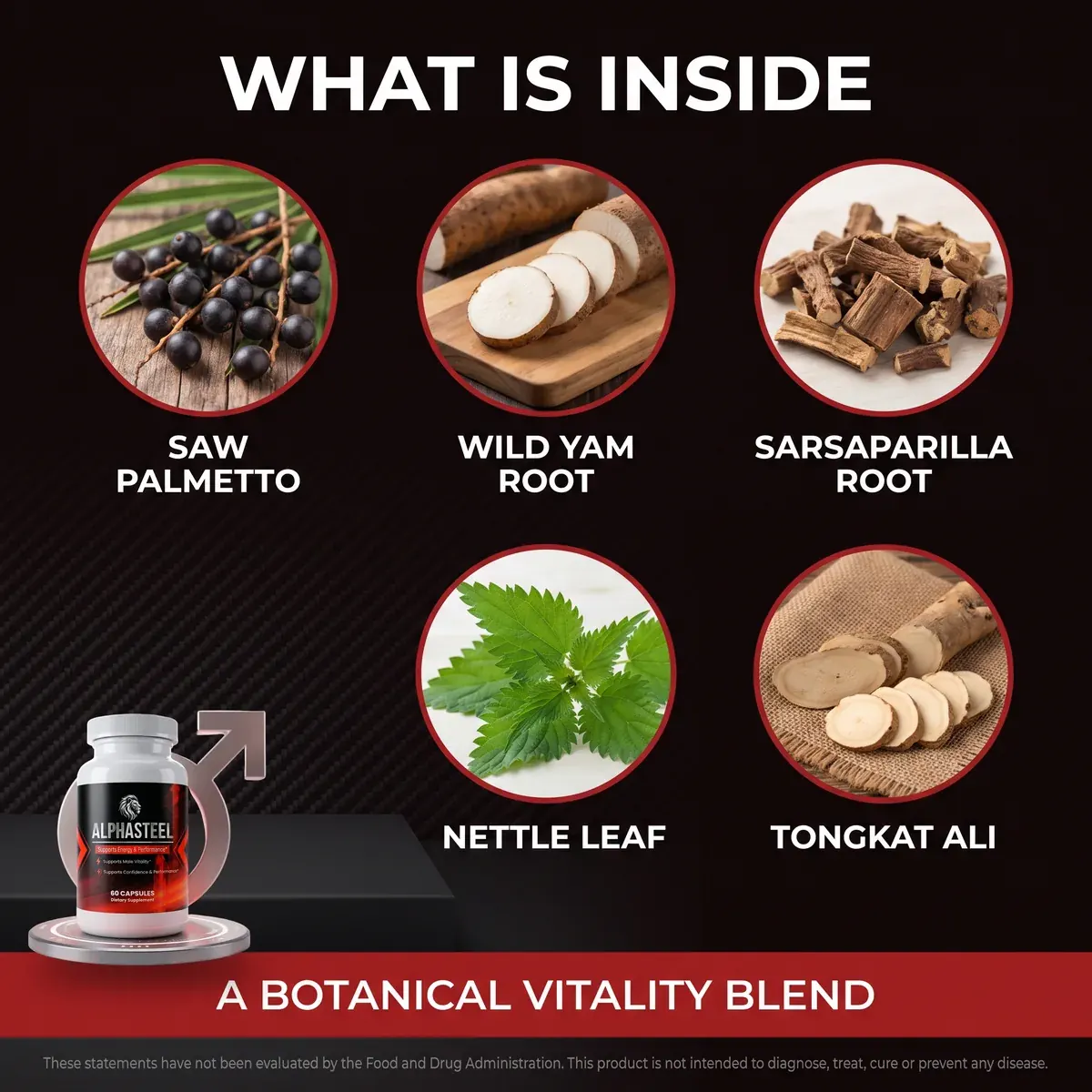
AlphaSteel is a dietary supplement, not a treatment for any condition, and its label claims support for energy and performance, male vitality, and confidence and performance, nothing more. This article describes research on an ingredient; it is not a claim about AlphaSteel, and nothing here describes it as a treatment for a hormone problem, whose symptoms are a reason to be assessed by a clinician. AlphaSteel also contains horny goat weed, whose flavonoids inhibit PDE5 in laboratory assays, so anyone taking a PDE5 prescription or a nitrate should raise it with the prescriber first. The safety page covers each active.
Sources cited in this article
- Leisegang K, Finelli R, Sikka SC, Panner Selvam MK. Eurycoma longifolia (Jack) Improves Serum Total Testosterone in Men: A Systematic Review and Meta-Analysis of Clinical Trials. Medicina (Kaunas). 2022;58(8):1047. doi:10.3390/medicina58081047 https://pubmed.ncbi.nlm.nih.gov/36013514/
- Talbott SM, Talbott JA, George A, Pugh M. Effect of Tongkat Ali on stress hormones and psychological mood state in moderately stressed subjects. J Int Soc Sports Nutr. 2013;10(1):28. doi:10.1186/1550-2783-10-28 https://pubmed.ncbi.nlm.nih.gov/23705671/
- Leitão AE, Vieira MCS, Pelegrini A, da Silva EL, Guimarães ACA. A 6-month, double-blind, placebo-controlled, randomized trial to evaluate the effect of Eurycoma longifolia (Tongkat Ali) and concurrent training on erectile function and testosterone levels in androgen deficiency of aging males (ADAM). Maturitas. 2021;145:78-85. doi:10.1016/j.maturitas.2020.12.002 https://pubmed.ncbi.nlm.nih.gov/33541567/
- Ang HH, Lee EL, Cheang HS. Determination of mercury by cold vapor atomic absorption spectrophotometer in Tongkat Ali preparations obtained in Malaysia. Int J Toxicol. 2004;23(1):65-71. doi:10.1080/10915810490269654 https://pubmed.ncbi.nlm.nih.gov/15162849/
- Morgado A, Tsampoukas G, Sokolakis I, Schoentgen N, Urkmez A, Sarikaya S. Do "testosterone boosters" really increase serum total testosterone? A systematic review. Int J Impot Res. 2024;36(4):348-364. doi:10.1038/s41443-023-00763-9 https://pubmed.ncbi.nlm.nih.gov/37697053/
- NIH Office of Dietary Supplements. Botanical Dietary Supplements: Background Information. https://ods.od.nih.gov/factsheets/BotanicalBackground-Consumer/